
Introduction
Dealing with a leaking tap at home can be a frustrating experience, especially for Nigerians who often face challenges with inconsistent water supply and rising water bills. A simple drip-drip-drip can not only disturb your peace but also escalate your household water expenses significantly. In Nigeria, where water scarcity tends to increase during the dry season, implementing a quick and effective fix can save you both water and money.
Every household faces plumbing issues at some point, and a leaking tap is among the most common. According to the National Bureau of Statistics, approximately 25% of Nigerian homes encounter plumbing issues annually, making it essential for homeowners to know how to address such problems efficiently.
In this comprehensive guide, you will learn everything you need to know about fixing a leaking tap at home in Nigeria. From the tools and materials required to the step-by-step process involved, as well as common mistakes to avoid, this article is designed to empower you to take control of your household plumbing.
What You Need
To effectively fix a leaking tap at home, you’ll need some essential tools and materials. Let’s break down what you’ll require:
- Tools:
- Adjustable wrench – costs around N1,500 to N3,500 depending on brand.
- Screwdriver (flat and Phillips) – typically priced between N500 and N2,000.
- Pipe wrench (for stubborn fittings) – available for N2,500 to N5,000.
- Tape measure – costs about N300 to N1,000.
- Materials:
- Replacement washers or O-rings (specific to your tap type) – prices range from N100 to N1,000.
- Plumber’s grease – between N200 to N600.
- Silicone sealant (if necessary) – costs around N1,000 to N2,500.
Before starting your repair, it’s crucial to identify the type of tap you have, as different taps may require slightly different approaches. The common types in Nigeria include cartridge taps, compression taps, and ball faucets. Each has its unique mechanism, which may influence how you go about fixing a leak.
Step-by-Step Guide
Now that you have all the necessary tools and materials, let’s walk through the process of fixing a leaking tap, step by step.
Step 1: Turn Off the Water Supply
The first thing you should do before attempting any plumbing work is to turn off the water supply. Look beneath your sink for a valve to the hot and cold water lines. Turn each valve clockwise. If you cannot find these valves, turning off the main water supply for your house may be necessary. This ensures that you won’t be caught off guard by rushing water during repairs.
Step 2: Plug the Drain
To avoid losing any small parts down the drain, use a sink plug or a rag to cover the opening. This ensures that you won’t have to fish them out later, which can be particularly frustrating.
Step 3: Remove the Tap Handle
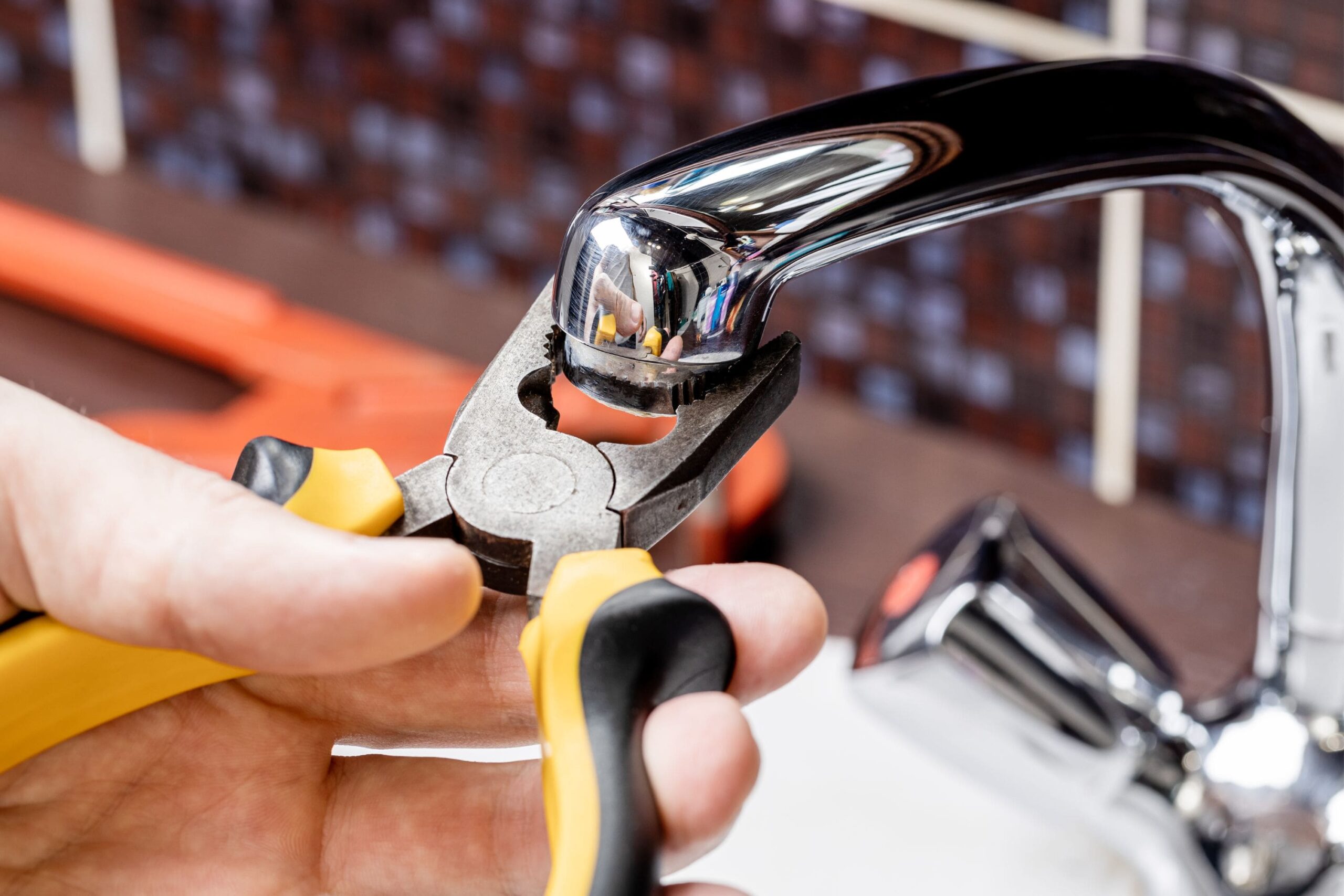
Next, you must remove the handle of the tap. Look for a small screw, which is usually hidden under a decorative cap. Use your flat screwdriver to carefully pry off the cap, then remove the screw using the appropriate screwdriver. Once the screw is out, carefully pull the handle upwards. If it’s stuck, some gentle wiggling may help.
Step 4: Take Off the Nut
Now that the handle is off, use your adjustable wrench to loosen and remove the packing nut located just beneath the handle. Be cautious to avoid marring the finish with the wrench. Remember that some taps may be tighter than they appear, requiring more effort to loosen.
Step 5: Inspect the Washer
Upon removing the nut, you will find the washer or O-ring. Inspect it for signs of wear and tear. A damaged or worn washer is a common reason for a leaking tap. Ensure it’s properly sized and in good condition. If it appears damaged, you will need a replacement.
Step 6: Replace the Washer or O-ring
If the washer or O-ring is worn out, replace it with a new one of the same size. You might find it beneficial to take the old washer to the local hardware store to ensure you get the right size. Remember to apply plumber’s grease around the new washer to improve its sealing and longevity.
Step 7: Reassemble the Tap
Once you have replaced the washer, carefully reassemble the tap in the reverse order of disassembly. Replace the nut, ensuring it is tightly secured but avoid over-tightening, which can cause damage. Reattach the handle and screw, replacing the decorative cap if applicable. Finally, remove the drain cover or plug to allow water flow again.
Costs and Fees
Here’s a breakdown of the costs associated with fixing a leaking tap at home in Nigeria as of 2026:
| Item | Estimated Cost (Naira) |
|---|---|
| Adjustable Wrench | N1,500 – N3,500 |
| Screwdriver | N500 – N2,000 |
| Replacement Washer/O-ring | N100 – N1,000 |
| Plumber’s Grease | N200 – N600 |
| S silicone sealant | N1,000 – N2,500 |
| Total Estimated Cost | N3,500 – N10,600 |
This estimate shows that with a bit of effort, you can save a significant amount compared to hiring a plumber, whose services can cost anywhere from N5,000 to N15,000 for simple repairs.
Comparison
Choosing the right type of tap that is less prone to leaks is crucial for long-term savings and convenience. Here’s a comparison of commonly used tap types in Nigeria:
| Tap Type | Leak Resistance | Ease of Repair | Cost |
|---|---|---|---|
| Compression Tap | Medium | Easy | N4,000 – N10,000 |
| Cartridge Tap | High | Moderate | N6,000 – N15,000 |
| Ball Faucet | High | Moderate to Hard | N8,000 – N20,000 |
Common Mistakes to Avoid
While fixing a leaking tap may seem straightforward, there are common pitfalls that can lead to further problems:
- Ignoring the type of tap: Not recognizing the tap type may lead to purchasing incompatible parts, which can ultimately lead to further leaks or damage.
- Over-tightening fittings: This is a common error that can crack parts or deform washers, leading to more leaks. Always snug things up carefully.
- Neglecting to clean before reassembly: An unclean surface may prevent proper sealing and result in ongoing leaks.
- Forgetting to check other parts: While you may have replaced the washer, sometimes other fittings or components may also need attention. Make sure everything is in good shape before reassembling.
Tips and Insider Knowledge
Here are some insider tips to help you with your DIY plumbing efforts:
- Use Teflon tape: When dealing with threaded fittings, applying Teflon tape can help create a tighter, leak-free seal.
- Take your time: Rushing through repairs can lead to errors. Take your time to understand each step and make necessary checks as you progress.
- Purchase quality parts: Investing in high-quality washers and fittings, even if they cost a bit more, can save you a lot of hassle in the long run.
- Document your plumbing work: Consider keeping track of any plumbing repairs made, including dates and parts replaced. This helps in diagnosing future issues.
Frequently Asked Questions
1. How do I know if the tap needs a washer replacement?
If your tap leaks when it’s turned off or shows signs of dripping, it often signifies that the washer is worn and needs replacement.
2. Can I fix a leaking tap without specialized tools?
Yes, you can accomplish this with basic tools like screwdrivers and wrenches. However, using the right tools ensures that the job is done effectively and efficiently.
3. Are there any chemical solutions to stop leaks?
While some chemical sealants are available, they are usually short-term fixes. It’s better to replace worn parts for a proper long-term solution.
4. How much time does it take to fix a leaking tap?
With the right tools and materials, fixing a leaking tap typically takes about 30 minutes to an hour, depending on your experience level.
5. What if the leak persists after replacing the washer?
If leaks continue, there may be other underlying issues such as damaged valve seats or connections that need further investigation.
Conclusion
Fixing a leaking tap at home in Nigeria is not only a cost-effective solution but also a rewarding DIY project that enhances your home maintenance skills. By understanding the tools and techniques required, along with common pitfalls and insider knowledge, you can tackle this household issue with confidence and efficiency. Taking the time to perform simple repairs saves you money, promotes sustainability, and protects your home from further water damage.
